

Jade Ant – Custom Luxury Furniture Manufacturing Insights
Jade Ant – Hotel & Residential Furniture Procurement Guides
Jade Ant – Global Furniture Wholesale & Manufacturing News

Industry Knowledge & Buying Guides

Custom Luxury Furniture Insights

Expert articles on custom furniture manufacturing, hotel FF&E procurement strategies, and global wholesale trends.

0%

Choosing a Luxury Wine Cabinet for a business is not just a design decision. It affects wine quality, service speed, and the impression guests carry away. Wine scientist and author Jamie Goode has written extensively about how wine responds to storage and handling. A practical principle drawn from that expertise is: “Protect the wine first; let the cabinet impress second.” Treat it as a guide, not a direct quotation.

Start with the bottles you actually serve. A restaurant with a compact, changing list needs different capacity from a hotel lounge displaying older vintages. Check the cabinet’s usable bottle count, shelf spacing, and access around the door. A Bordeaux bottle may fit neatly, while a wider sparkling-wine bottle can disrupt a tightly packed row. Small details matter.

Temperature stability deserves close attention. Look for reliable controls, clear temperature displays, and suitable separation for wines served at different temperatures. Ask about vibration, interior lighting, humidity management, and what happens after a power interruption. Specifications are useful, but they do not tell the whole story. Request operating guidance and service support before buying.

Luxury should feel practical. A quiet compressor, sturdy shelving, and a finish that suits your room can make daily service smoother. Yet a beautiful cabinet is still the wrong choice if staff struggle to find a bottle during a busy dinner. Think through cleaning, replenishment, ventilation, and future growth. Some assumptions will miss the mark. That is worth admitting early. The right cabinet balances preservation, presentation, and the less glamorous routines of running a business.
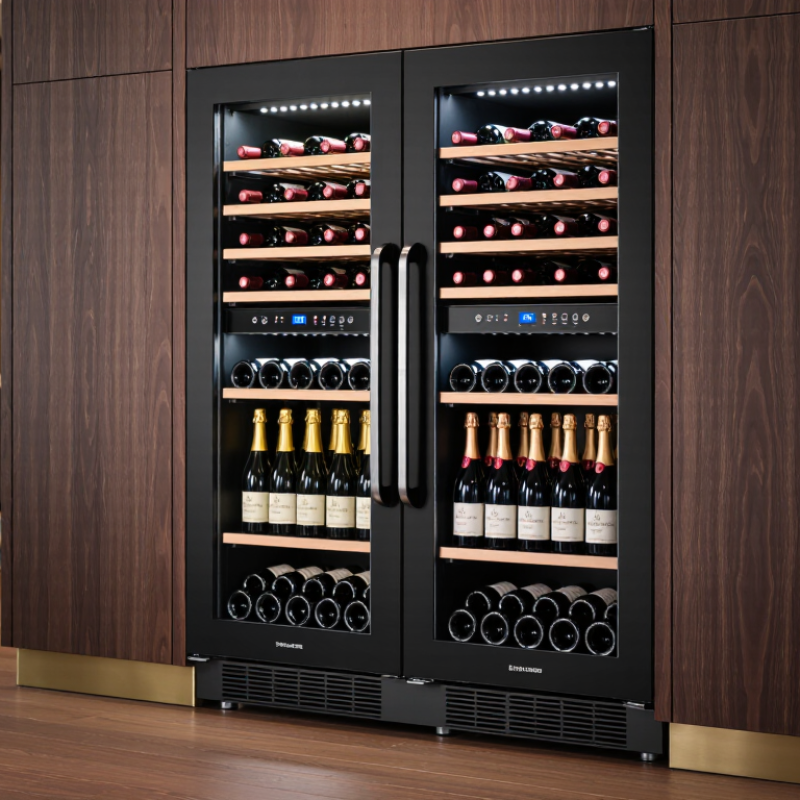
How to Choose a Luxury Wine Cabinet for Your Business?

Define Your Business’s Wine Storage Requirements

Before selecting a cabinet, map the work it must do. Estimate bottles sold on a busy week, not an average one, then add space for reserve stock, seasonal menus, and incoming deliveries. A 60-seat dining room with a short list may need more open-bottle access than long-term capacity. A retailer or tasting venue may need the reverse. OIV’s 2024 State of the World Vine and Wine Sector report estimated global wine consumption at 221 million hectolitres in 2023, down 2.6% from 2022. That broad decline is a reminder: global figures cannot predict your local turnover. Use your own sales records.

Temperature consistency matters more than a flashy display. The Australian Wine Research Institute’s storage guidance identifies about 15°C as a suitable storage temperature; avoid frequent swings, direct light, and heat from ovens or windows. If you serve both sparkling and still wines, check whether separate temperature zones fit your actual menu. They take space. Count bottle shapes too: sparkling bottles, magnums, and wider formats can reduce usable capacity, even when the advertised bottle count looks generous.

Measure the cabinet location before comparing capacities. Note door clearance, ventilation space, floor level, and the route from delivery entrance to storage. Then decide how many bottles staff must reach during service without moving reserve stock. A cabinet can be technically large and still be awkward at 7 p.m. One planning flaw is easy to miss: demand estimates often assume every bottle turns neatly. They do not. Keep a modest buffer, but review it against monthly stock data rather than buying capacity for an imagined peak.

Determine Capacity and Bottle Compatibility

Capacity should reflect the bottles your business actually stores, not the largest number in a product description. A restaurant with a compact wine list may need fewer slots than a hotel lounge holding reserve stock. Estimate peak inventory, then leave room for seasonal changes and incoming deliveries. A cabinet filled to its limit can make restocking awkward. That matters.

Check how capacity is counted. Some specifications assume standard Bordeaux-shaped bottles, which are relatively narrow and consistent. Burgundy bottles have wider shoulders, while sparkling-wine bottles are often broader still. These shapes can reduce usable capacity, especially when shelves are tightly spaced. Measure a sample of your widest bottles, including their height, before choosing a cabinet. Measure twice.

Shelf design deserves equal attention. Fixed rows may look orderly, but adjustable shelves can better accommodate mixed bottle shapes and labels that need to remain visible. Consider whether staff can remove bottles without shifting neighboring stock. Also check the cabinet’s interior depth and door clearance against your planned placement. Capacity estimates are never perfect; your actual mix may change. A small allowance for bottle variation can prevent daily storage frustrations later.

Compare Temperature and Humidity Control Features

For a business wine cabinet, compare how steadily it holds temperature, not just its lowest setting. The Wine & Spirit Education Trust’s storage guidance places long-term storage around 10–15°C. Frequent swings can age wine unevenly, especially when a cabinet sits near a busy kitchen or sunlit window. Ask for the operating range under real conditions, and check whether the display shows the actual cabinet temperature or only the set point.

Humidity deserves equal attention. The Australian Wine Research Institute’s technical guidance notes that cork storage conditions matter; many professional cellar references use roughly 50–70% relative humidity as a practical target. Too dry may encourage corks to shrink; too damp can invite mold on labels and packaging. Look for adjustable humidity control, an interior sensor, and a clear alarm when conditions drift. Small details count. A sensor placed near the cooling outlet may not represent the cabinet’s warmest shelf.

For mixed inventories, separate temperature zones help, but only if each zone remains stable when doors open repeatedly. Ask the supplier for test results showing temperature and humidity recovery after door openings, plus sensor placement and calibration intervals. A polished touchscreen is not proof of accuracy. We have to admit that published storage ranges do not fit every room or bottle format; measure the cabinet in its intended location before loading valuable stock.

Evaluate Materials, Design, and Installation Needs

For a luxury wine cabinet, judge the materials by how they perform, not just how they look. Solid, moisture-resistant cabinetry and a well-sealed door help protect against daily wear and temperature swings. Check the insulation, gasket fit, and shelf supports; a heavy bottle should slide out without flexing the shelf. ASHRAE’s 2022 Handbook—Refrigeration identifies stable temperature as a key consideration in wine storage, with about 55°F (13°C) commonly used as a cellar target. Ask the supplier how the cabinet maintains that temperature under frequent service. Small details matter.

Design should suit both the room and the staff. Full-extension shelves improve access, while clear labels and sensible bottle groupings can reduce handling. Glass doors look inviting, but assess glare, heat exposure, and whether the cabinet’s lighting adds warmth. ENERGY STAR reports that certified commercial refrigerators and freezers use about 20% less energy than standard models; treat this as a comparison benchmark, since not every wine cabinet falls within that certification category. Installation deserves equal attention. Measure doorways, ventilation clearances, floor capacity, and the route from delivery point to final position. A common planning miss is forgetting that a cabinet needs airflow behind or above it. Confirm electrical requirements and service access with a qualified installer before ordering. That step can feel overly cautious, but retrofitting a tight alcove is worse.

How to Choose a Luxury Wine Cabinet for Your Business? — Evaluate Materials, Design, and Installation Needs

Evaluation area What to assess Practical planning guidance Questions to verify before purchase
Cabinet construction Interior and exterior materials, insulation, joints, and finish quality. Solid wood, quality veneer, stainless steel, and finished metal are common premium choices. Check that shelves and interior surfaces are suitable for a cool, humid environment. Are materials moisture-resistant? Can the finish be cleaned with products approved for food-service environments?
Capacity and bottle format Usable capacity, shelf spacing, and compatibility with the bottles your business stocks. Published capacity is often based on standard Bordeaux-style bottles. Burgundy, Champagne, and other wider bottles can reduce usable capacity; allow extra space for stock rotation and access. Is capacity stated for standard bottles? Are shelves adjustable or removable, and can staff reach frequently served bottles easily?
Temperature control Temperature range, stability, recovery after door openings, and number of independently controlled zones. Many wine cabinets offer adjustable settings within roughly 40–65°F (about 4–18°C). Select a range that suits the wines and service plan; dual zones can support separate storage or serving temperatures. What is the usable set-point range? How does the cabinet perform in the expected room temperature and during frequent service?
Humidity and light protection Humidity management, door glazing, UV protection, and interior lighting. For cork-sealed wine storage, a relative humidity level around 50–70% is commonly used as a planning reference. Tinted or UV-resistant glazing and low-heat LED lighting can help limit exposure. Is humidity monitored or controlled? Is the glass UV-resistant, and can the display lighting be dimmed or switched off?
Cooling system and noise Cooling technology, vibration control, noise level, and service access. Compressor models are common for larger cabinets; thermoelectric models are generally used for smaller capacities and suitable ambient conditions. Vibration isolation can be important for stored bottles. What is the stated operating noise? Does the installation location meet the model’s ambient-temperature requirements?
Design and customer experience Door style, handle, shelf presentation, lighting, security, and fit with the venue interior. Choose finishes and proportions that suit the dining room, bar, or retail setting. For public areas, consider a lock, sturdy hinges, and shelving that presents labels clearly. Can the door swing be reversed? Are locks available? Does the display remain readable without excessive light exposure?
Freestanding or built-in installation Ventilation direction, required clearances, door opening, and cabinet dimensions. A freestanding model typically needs open space around its ventilation areas. A built-in or under-counter model must be specifically designed for that installation type; follow the manufacturer’s clearance requirements. Are front or rear ventilation paths required? Have the full unit dimensions, door swing, and service clearances been measured on site?
Electrical and site preparation Voltage, plug type, circuit requirements, floor support, and proximity to heat sources. Confirm the unit’s nameplate requirements and applicable local electrical rules. Install on a level, stable surface and avoid locations exposed to direct sunlight, ovens, or other significant heat sources. Does the outlet match the unit specification? Can the floor support the loaded cabinet, and is the location protected from heat and water?
Maintenance and service Filter or condenser cleaning, door-seal inspection, spare parts, and service access. Plan for regular cleaning according to the operating manual. Keep ventilation areas accessible and leave enough room for technicians to inspect the unit. What routine maintenance is required? Are service support and replacement parts available for the expected period of use?
Business fit and total cost Daily service volume, stock growth, energy use, delivery, installation, and warranty terms. Size for both current inventory and expected growth. Compare operating-energy information where available, and include delivery, site preparation, installation, and ongoing maintenance in the budget. Does the warranty cover commercial use? Are delivery access, installation, and disposal of packaging included in the project plan?

Note: Temperature ranges, capacity, clearances, and electrical requirements vary by model. Confirm the product documentation and site conditions before ordering or installation.

Assess Energy Use, Maintenance, and Total Cost of Ownership

A luxury wine cabinet should protect stock without quietly inflating operating costs. Before comparing models, estimate how many bottles you will store and how often staff open the door. Frequent access and a warm service area can increase cooling demand. Ask for the cabinet’s annual energy-use figure, then compare it with your expected operating hours and local electricity rates. Treat the figure as a guide, not a guarantee; real use depends on placement and workload. Small details matter.

Maintenance affects both reliability and staff time. Check how easily you can clean the interior, reach the condenser area, and replace door seals. A blocked vent or worn gasket can make the cooling system work harder. Ask what routine servicing involves and whether qualified technicians are available in your area. Keep a simple log of cleaning, temperature checks, and repairs. It takes minutes, but missed maintenance can be costly.

Calculate total cost of ownership over the years you expect to keep the cabinet. Include purchase and delivery, installation, electricity, scheduled service, repairs, and possible downtime. A lower purchase price may not mean a lower long-term cost. Still, estimates can be imperfect: usage changes, and repair needs are difficult to predict. Compare realistic scenarios, including a busy season, before settling on a capacity or feature set.

FAQS

How should I estimate the cabinet capacity my business needs?

Use peak-week sales, reserve stock, seasonal menus, and expected deliveries. Check monthly records too; busy weeks can be misleading.

What storage temperature should I aim for?

Around 13–15°C is a practical reference for wine storage. Stable conditions matter more than a flashy display. Avoid direct sunlight, oven heat, and frequent temperature changes.

Do advertised bottle counts reflect real capacity?

Not always. Wider sparkling bottles, large formats, and varied bottle shapes can reduce usable space. Measure your widest bottles before choosing.

How much extra room should I leave?

Leave a modest buffer for deliveries and seasonal changes. A cabinet packed to the limit can make restocking awkward. That matters.

Which shelf features help during service?

Adjustable, full-extension shelves can make mixed bottle shapes easier to handle. Clear labels also help staff find bottles without shifting nearby stock.

What should I measure before installation?

Check the cabinet’s footprint, door clearance, ventilation space, floor level, and delivery route. Measure twice. Confirm electrical needs and service access with a qualified installer.

Are glass doors and interior lights practical?

They can help guests view the selection, but check glare and heat exposure. Lighting that warms the cabinet may undermine stable storage.

How can I tell whether my capacity estimate is wrong?

Compare actual stock and sales each month. Bottle turnover is rarely neat, and your mix may change. Review the plan instead of buying for an imagined peak.

Conclusion

Choosing a Luxury Wine Cabinet for a business starts with understanding how wine will be stored and served. Consider the types and quantity of bottles you expect to keep, how quickly your inventory turns over, and whether your collection includes bottles of different shapes and sizes. Select a cabinet with enough capacity for current needs while leaving room for future growth, and check that its shelves can accommodate your bottle mix.

Next, compare temperature and humidity controls to find a setup that supports consistent storage conditions. The cabinet should also suit the space: assess its materials, appearance, ventilation, power supply, and installation requirements. Finally, look beyond the purchase price. Energy consumption, cleaning, routine maintenance, and expected service life all affect the total cost of ownership. Weighing these factors together can help your business choose a practical, attractive cabinet that fits its operations and budget.

Liam

Liam

Liam is a dedicated marketing professional with a passion for elevating brand presence and engagement. With a deep understanding of the company’s core offerings, he expertly crafts informative blog articles that not only showcase the products but also highlight their unique advantages in the......