


Jade Ant – Custom Luxury Furniture Manufacturing Insights
Jade Ant – Hotel & Residential Furniture Procurement Guides
Jade Ant – Global Furniture Wholesale & Manufacturing News

Industry Knowledge & Buying Guides

Custom Luxury Furniture Insights

Expert articles on custom furniture manufacturing, hotel FF&E procurement strategies, and global wholesale trends.

0%

Choosing a Fireplace TV Stand Cabinet is not only a style decision. It affects viewing comfort, storage, heat management, and everyday safety. A cabinet may look impressive online, yet feel oversized beside a narrow sofa. Its shelves may also fail to fit a soundbar, game console, or streaming device. Small details become important quickly.

Interior designer Sarah Barnard says, “Good design should support the way people live.” That principle guides this practical introduction. The right Fireplace TV Stand Cabinet should match your room’s width, ceiling height, television size, and daily habits. Check the manufacturer’s weight rating before placing a television on top. Measure cable openings, shelf depth, and the distance from the fireplace to nearby materials. Never rely on appearance alone.

This guide presents 10 useful tips for comparing models with greater confidence. It considers heating performance, ventilation, remote controls, materials, assembly, storage, and warranty support. Look for clear safety instructions and recognized electrical certifications. Keep curtains, paper, and decorative fabrics away from heat outlets. Your fireplace may be electric, but it still produces warmth.

Some choices are less obvious. A glossy finish can reveal fingerprints. Open shelves collect dust. Dark glass can make a small room feel heavier. I also believe many buyers underestimate delivery damage and difficult assembly. That deserves more attention. No cabinet suits every home. However, careful measurements and honest reflection can prevent expensive disappointment. The following tips will help you evaluate beauty, function, and long-term reliability together.
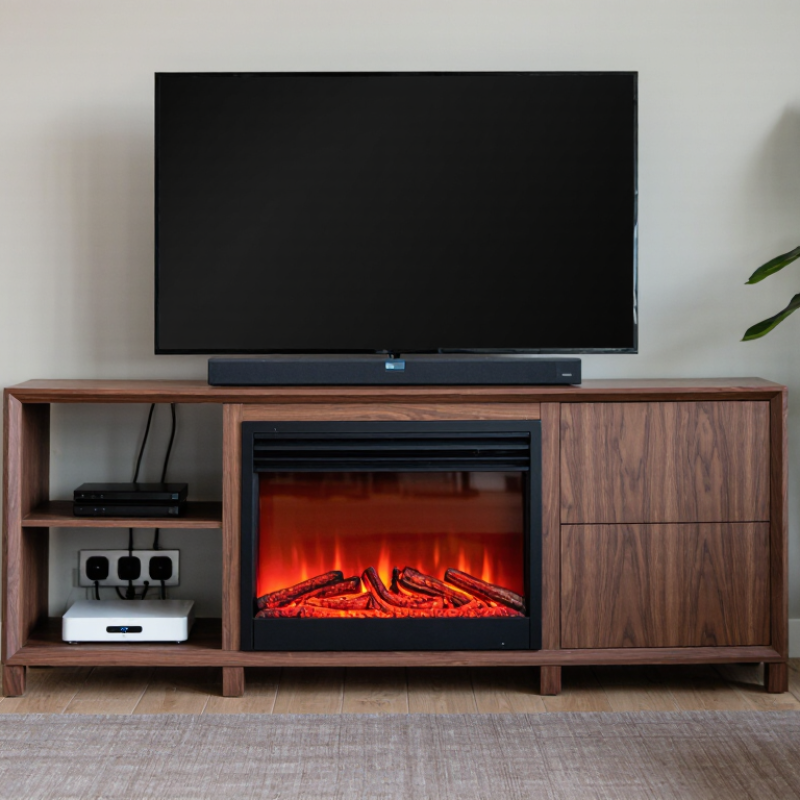
10 Tips for Choosing a Fireplace TV Stand Cabinet

Define Your Room Needs and Fireplace TV Stand Purpose

Define Your Room Needs and Fireplace TV Stand Purpose

Choosing a fireplace TV stand begins with the room, not the cabinet’s appearance. Measure the wall, viewing distance, outlet locations, and walking paths. A 55-inch television may overpower a narrow room, while a small screen can look lost above a wide cabinet. The 2024 Home Entertainment Report from the Consumer Technology Association shows that large-screen televisions remain central to household entertainment. However, screen size should follow viewing distance and comfort, not fashion.

Measure twice.

Decide what the fireplace function means in your home.

Is it decorative lighting, supplemental warmth, or the room’s main heat source? That answer affects ventilation, controls, power access, and placement.

The National Fire Protection Association reported 44,210 home heating fires annually during 2016–2020, causing about 480 deaths and 1,370 injuries.

Keep the unit away from curtains, paper, and crowded furniture. The U.S. Consumer Product Safety Commission also recommends maintaining a three-foot zone around heating equipment.

Your cabinet should support daily behavior.

Include storage for consoles, remotes, and cables, but avoid blocking air circulation around electronic equipment. Check the television’s mounting pattern, cabinet weight rating, and fireplace clearance instructions.

I have seen attractive setups become uncomfortable when glare hits the screen or warm air rises directly toward it. That mistake is easy to overlook.

A practical plan may leave unused space, and that is acceptable. Safety and viewing comfort deserve more room than decoration.

Measure the Space and Match the Cabinet to Your Television

Measure the space before choosing a fireplace TV stand cabinet. A television’s advertised size measures the diagonal, not its actual width. Measure the screen, feet, wall, and power outlet separately. The cabinet should be wider than the television, leaving roughly 3 to 6 inches on each side. That margin improves balance and makes the setup look less cramped.

Height matters too. When seated, your eye level should align near the screen’s center. A cabinet that is too tall may cause neck strain. The Consumer Technology Association reported strong demand for larger televisions in recent U.S. market forecasts, so many rooms now contain screens wider than 60 inches. Bigger does not always mean better. Check the cabinet’s maximum load and usable surface depth, not only its advertised width.

Leave ventilation space around the fireplace insert and television. Follow the appliance manual for exact clearances, because heat tolerance differs between models. The U.S. Consumer Product Safety Commission has reported thousands of annual injuries linked to furniture and television tip-overs. Secure the cabinet when possible, especially in homes with children or pets. My first measurement was wrong because I ignored the baseboard, so the cabinet could not sit flush. Measure the wall at floor level. Then measure again.

Compare Fireplace Types, Heating Features, and Safety Requirements

Choosing a fireplace TV stand starts with the heating method. Electric units are usually easiest for apartments because they need no chimney or combustion vent. Infrared models can warm people and furniture directly, while fan-forced heaters warm the surrounding air. Wood and gas options provide stronger ambience, but they demand ventilation, clearance, and professional installation. I would not judge heat by flame brightness.

Tip 1: Check the heater’s wattage, thermostat, and coverage rating. A typical 1,500-watt electric heater draws substantial power, so confirm the circuit can handle it. The U.S. Department of Energy notes that electric resistance heating converts nearly all incoming electricity into heat, but operating cost still depends on local electricity prices. Measure the room, not the advertising claim.

Tip 2: Treat safety clearance as non-negotiable. Keep curtains, paper, toys, and cables away from the heater outlet. NFPA reported an average of 44,210 home heating fires annually from 2016 to 2020, causing 480 deaths and 1,370 injuries. Choose a cabinet with overheat protection, a cool-touch surface, tip-over protection where applicable, and certification to a recognized electrical safety standard. Secure the television against tipping, especially in homes with children or pets. A remote is convenient. It is not a safety system. I would also leave ventilation space around the cabinet, even when the manual seems vague.

Evaluate Materials, Storage Design, Cable Management, and Style

Choose materials before admiring the finish. Tip 1: Prefer low-emission engineered wood or solid wood with sealed edges. The U.S. Environmental Protection Agency notes that indoor VOC levels can be two to five times higher than outdoor levels. Tip 2: Check for durable, moisture-resistant surfaces. Tip 3: Inspect the fireplace insert’s safety certification and ventilation requirements. NFPA reports that heating equipment caused about 13% of U.S. home fires from 2016 to 2020. Heat clearance is not decoration.

Storage should match real viewing habits. Tip 4: Measure your media devices, not just the television. A streaming box needs airflow around its vents. Tip 5: Select adjustable shelves for consoles, remotes, and game accessories. Tip 6: Use doors for dust control, but avoid blocking ventilation. Tip 7: Confirm the cabinet supports the television’s full weight and width. I once measured the screen correctly and forgot the soundbar. That mistake is easy to repeat.

Cable management reveals professional design. Tip 8: Look for rear openings with smooth, reinforced edges. Tip 9: Separate power cables from signal cables when possible. Tip 10: Leave a service loop behind the cabinet, so repairs do not require moving heavy furniture. The Consumer Technology Association’s industry research continues to show strong household demand for connected entertainment devices, making cable access increasingly important. Choose a style that fits the room’s scale. A shallow cabinet may look elegant, but it can feel unstable beside a large screen. Recheck every measurement.

10 Tips for Choosing a Fireplace TV Stand Cabinet

This practical evaluation model ranks the main factors to review before buying a fireplace TV stand cabinet. Materials and structural safety receive the highest emphasis, followed by storage, cable management, fireplace performance, and visual style.

Check Installation Details, Energy Use, Maintenance, and Value

10 Tips for Choosing a Fireplace TV Stand Cabinet

Installation details deserve more attention than appearance. Measure the wall, outlet position, and television width before ordering. Check the heater’s required clearances, ventilation openings, and maximum load. Never cover air inlets with books or cables. A cabinet placed too close to curtains can create unnecessary risk. NFPA reports that heating equipment caused about 44,210 home structure fires annually from 2016 to 2020. Airflow matters. Follow the manufacturer’s installation instructions, and use a qualified electrician when wiring needs alteration.

Energy use affects long-term value. The U.S. Department of Energy explains that electric resistance heating converts nearly all incoming electricity into heat at the point of use. That does not make it inexpensive. A 1,500-watt heater running two hours daily uses about 1,095 kilowatt-hours yearly. At the U.S. Energy Information Administration’s 2024 residential average of roughly 16.5 cents per kilowatt-hour, that equals about 181 dollars. Actual costs vary. Choose adjustable heat, a thermostat, and an automatic shutoff.

Maintenance is simple but easy to neglect. Vacuum dust from vents, inspect the plug, and keep the remote dry. Clean the glass only after the unit cools. I have found that cable clutter quickly reduces a cabinet’s real value. Look for sturdy hardware, replaceable parts, clear warranty terms, and enough storage for devices. A low price can seem attractive. My own mistake was judging furniture by appearance alone; weak hinges and poor ventilation became expensive problems later.

FAQS

How should I measure the room before choosing a fireplace TV stand?

Measure the wall, viewing distance, outlets, and walking paths. Measure twice. A wide cabinet may overwhelm a narrow room.

How do I choose the right television size?

Match screen size to viewing distance and room width. A large screen can feel uncomfortable nearby. A small screen may look lost.

What should the fireplace function be?

Decide whether it provides decoration, extra warmth, or the room’s main heat. This choice affects placement, ventilation, and controls.

How much clearance does the heating unit need?

Keep curtains, paper, and crowded furniture away. Maintain a three-foot zone around heating equipment. Airflow matters.

What installation details should I check?

Check ventilation openings, required clearances, outlet locations, and television weight limits. Never cover air inlets with books or cables.

How much electricity might a 1,500-watt heater use?

Running two hours daily uses about 1,095 kilowatt-hours yearly. At 16.5 cents per kilowatt-hour, that is roughly 181 dollars.

Which safety features are useful?

Choose adjustable heat, a thermostat, and automatic shutoff. Use a qualified electrician when wiring changes are necessary.

How can I maintain the fireplace TV stand?

Vacuum vents, inspect the plug, and keep the remote dry. Clean the glass only after cooling. Small tasks prevent bigger problems.

What storage and construction details matter most?

Look for sturdy hardware, replaceable parts, clear warranty terms, and space for consoles, remotes, and cables. Avoid cramped electronics.

What common mistake should shoppers avoid?

Do not judge the cabinet by appearance alone. I once overlooked weak hinges and poor ventilation. The attractive choice became expensive.

Conclusion

Choosing the right Fireplace TV Stand Cabinet starts with understanding how you want the room to function. Consider whether the unit will serve as a media center, a heat source, a storage solution, or a combination of these purposes. Measure the available wall, floor, and viewing space carefully, then select a cabinet that supports your television securely without overwhelming the room. Compare fireplace types, heating settings, controls, and safety features, including proper ventilation, stable placement, and safe operating distances.

Material quality, storage capacity, cable management, and overall style should also match your daily needs and interior design. Look for shelves, drawers, and openings that keep devices organized while allowing airflow and easy access to connections. Before purchasing, review installation requirements, power consumption, maintenance tasks, and warranty or service details. A well-chosen Fireplace TV Stand Cabinet should provide dependable comfort, practical organization, attractive design, and lasting value for your space.

Ethan

Ethan

Ethan is a dedicated marketing professional with a deep understanding of our company's innovative products and services. With years of experience in the industry, he possesses a sharp acumen for identifying market trends and consumer needs, ensuring that our offerings remain competitive and......